Moving to Dublin, Ireland – the Ultimate Guide
Published:
by Rasmus Nørgaard

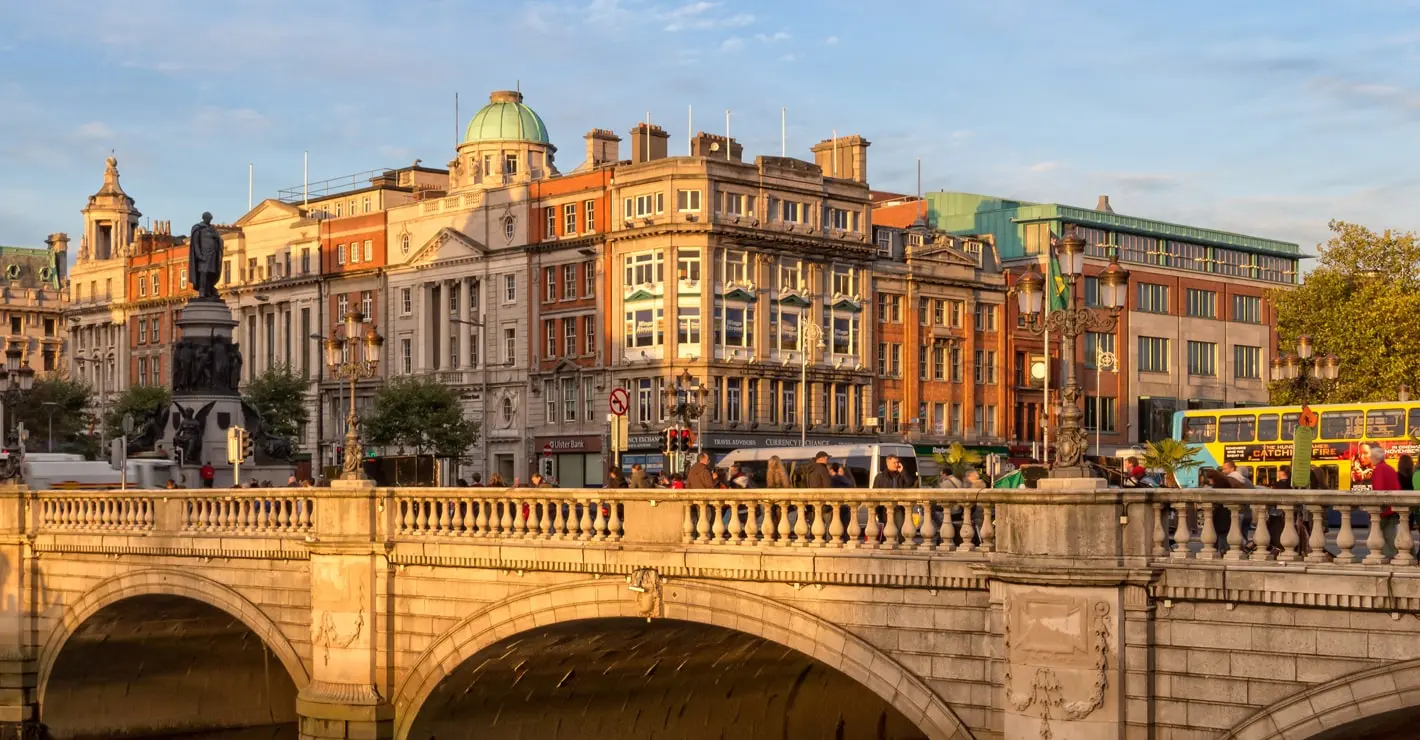
If you’ve found yourself here because you’re considering moving to Ireland’s capital city, we envy you! Dublin has it all, from a world-class social scene to superior higher learning facilities and a vibrant job market.
The city is famously a major European tech centre, with companies like Google, Meta, Microsoft and Amazon all boasting a strong presence there.
Average earnings are relatively high, and the city frequently ranks well in lists of great places to live.
This guide is aimed at professionals looking to set up shop in the city, as well as families hoping to start afresh. We also have information for expats and students who are considering a move to Dublin.
The most obvious attractions for people considering Dublin as a place to call home are its bustling economy, its great position on the east coast of Ireland, and its reputation as a fun, upbeat city with lots to do.
Dubbed The Silicon Valley of Europe, it is a magnet for tech specialists from far and wide – but also has a cultural richness that provides a counterweight to its more modern, future-focused credentials.
As a member of the European Union, Dublin is especially easy for people of the EU to move to – and UK residents also have the right to live and work there.
As with all major cities, there are certain downsides to moving to Dublin, including the relatively high cost of living (it appears in some ‘10 most expensive European cities’ lists).
A local housing shortage has also driven up rental prices in the best areas – plus the weather can be unpredictable.
However, it is generally a cheaper place to be than London – though there are plenty of large mansions costing €10 million or more for those with deep pockets.
Residents of the UK, the EEA and Swiss nationals can freely live and work in Dublin. For everyone else, you will need a valid permit and, in some cases, a visa. For full details, visit the Irish immigration website.
To apply for your Personal Public Service (PPS) number (necessary for access to public services, such as welfare benefits, schools and healthcare), check out the My Welfare site.
Dublin is Ireland’s most vibrant city and attracts people globally who want to live, work and study there. Unsurprisingly, therefore, it is not a cheap place to relocate to.
A single person would need to have at least €1,200 to spare on top of their rent to be able to live reasonably well in Dublin. For a family of four, the total breakdown of costs is likely to come somewhere between €5,000 to €6,000.
Students should expect to pay at least €700 for accommodation, unless house sharing, which can work out cheaper.
Rent – anything from €1,300 to €2,500 for a one-bedroom apartment.
Groceries – budget at least €300 a month if you are on your own.
Utilities – unlikely to be less than €100 per month and much more if you’re in a large family.
Public transport – at the time of writing, a monthly city zone pass costs €96.
Let’s not dance around the truth here: Dublin is on the pricey side. It ranks 41st on the Mercer list of the world’s most expensive cities.
Student – expect to spend in the region of €1,200+ a month if you are in a shared apartment.
Single professionals – if you want your own place, then this will likely rise to around €2,500.
Families – a monthly take-home budget of €5,000 is a reasonable figure to be aiming for.
Dublin is facing a severe housing shortage and has a vacancy rate for rentals that is less than one per cent. Finding a property can be a nightmare.
While the city has pledged to build tens of thousands of new homes, anyone planning on or relocating to Dublin should do their homework well in advance.
Make sure you have sufficient funds, all of the necessary paperwork, and know which areas you would like to live in.
If buying, similarly large budgets are required, with one-bedroom apartments in the city centre typically costing more than €300,000.
There are several schemes that may be of interest to property buyers, including the nationwide help to buy scheme and Dublin’s Affordable Purchase Scheme, which helps eligible applicants buy a home at a discount price.
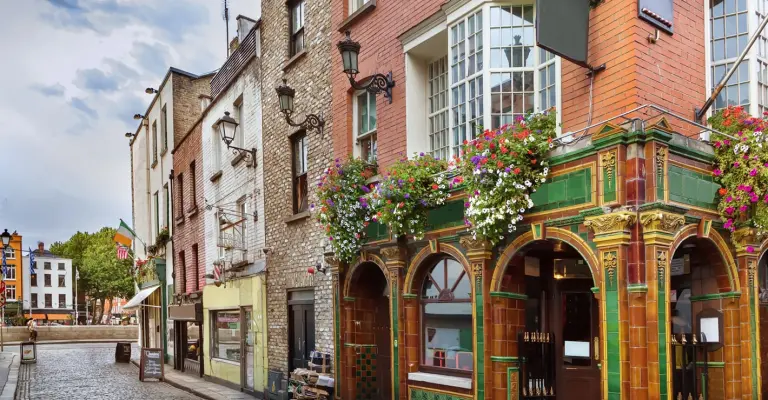
Dublin has something for everyone, from city centre walks to leafy streets and trendy villages.
One of the nicest areas to live is Ballsbridge, which is home to several embassies and many expensive properties. The Dublin 2 postcode is also highly desirable.
Ranelagh – a hip location with great restaurants and parks
Rathmines – popular with students and professionals and hosting a lively café culture
Clontarf – this attractive destination near the coast is family-oriented and has good transport links to the city
Drumcondra – a slightly more affordable option near the university
Students are also drawn to Portobello and Smithfield.
Most parts of town are well connected to the city via Dublin Bus, the Luas tram network and DART rail services.
If you’re considering Dublin as an investment opportunity, it’s worth noting that rental increases enjoyed a 7.3% year-on-year growth in 2024. Rents are projected to see continued growth because of housing shortages.
As well as the high-tech sector, Dublin has thousands of employees working in pharmaceuticals and financial services. As with most cities, there are also jobs in education, retail, healthcare, tourism and many other sectors.
Salaries are generally good, ranging from €30,000 to €150,000+ in tech and finance. Engineering jobs tend to start at slightly more generous salaries of around €40,000.
The work culture in Dublin is more informal and friendly than some cities, and there’s a pleasantly relaxed hierarchy in many organisations.
But Dublin is a serious place too, and professionals are expected to do great work and perform at a high level. The ‘craic’ that Ireland is so famous for usually has little place in the boardroom!
As well as the internationally famous Indeed website, jobseekers should check out jobs.ie and jobsireland.ie.
Newcomers to Dublin are spoiled for choice when it comes to educational possibilities. Public schools are state-funded and look after students throughout primary and secondary education, while private facilities also cater to all age groups.
Among the top-ranked private schools are Blackrock College and St Andrew’s College.
Many schools accept international students, or you could seek out schools that specifically cater to them, such as the Nord Anglia International School, which accepts children aged 3 to 18. It also costs from around €15,000 per year
There’s a wide choice of universities in Dublin, including University College, Trinity College, and Dublin City University. The most prestigious of these is undoubtedly Trinity College, which is often ranked in the world’s top 100 universities.
If you need childcare, the ECCE scheme offers free preschool for 3 to 5-year-olds, though a private full-time creche is likely to cost at least €1,000 per month.
While most nights out will be spent in the city centre, a daytime stroll is a slightly different proposition and may well lead you to the west of the city, where the sprawling Phoenix Park awaits you.
Other parks include Fairview Park and Griffith Park, which are close to the town centre.
Museums and galleries tend to be clustered around the Trinity College area, while shoppers head to Grafton Street and the surrounding lanes. Traditional pubs and trendy bars abound (head to Temple Bar, Camden Street, Harcourt Street or Capel Street for a good selection) and there are three restaurants with two Michelin stars in town.
In the city centre, expect to pay between €3.50 and €5.50 for a latte, and around €6.50 to €9 for a pint of beer. No one said living in Dublin was cheap!
Ireland has a robust public health care system available to residents – if you are eligible, you can claim a medical card that gives you access to free services. Many people choose to top up state services with private health insurance.
If you need to visit a GP and don’t have a medical card, the visit will cost around €50, while a trip to A&E is €100 unless you are referred by your doctor or qualify for exemptions under EU regulations. This can be a surprise to people from the UK who are used to free emergency care.
Crime-wise, the city’s police (Garda) say there has been a significant decrease in robbery, burglary, violent disorder and theft offences of late. As with any major city, though, incidents are far from uncommon.
Even the nicest parts of town can be unsafe in the small hours, and there are certain areas that most tourists wouldn’t seek out, such as Ballymun.
Most people moving to Dublin arrive with more than just a suitcase. As a result, you will probably need the services of a removal company. A well-known local removal firm is manwithavandublin.ie.
Moving home can be stressful if you are worried that your new property may have less space than your old one. This can be especially true when moving from the town/countryside to a large city.
Self storage in Dublin is a popular option in such cases, as it provides you with a safe space to keep your goods for a few months or longer.
You can select the exact size unit you need, and usually pay on a rolling month-by-month basis. It makes sense to declutter before you start renting, so you don’t end up paying to store items you no longer need.
The go-to place for inside information on Dublin is Reddit, where there are many forums about city life. The r/Dublin subreddit has more than 120,000 members.
Irish people are famously friendly, but it would be inaccurate to say everybody fits this description. However, a friendly smile and a bit of chit-chat will go far in many situations.
Writing on the Education Ireland blog, Indian expat Shivani Bhat, who moved to the city to study, says she was impressed by the locals’ driving skills, the Dublin bus service and the ease of opening a bank account and getting an Irish resident permit online.
Others complain of bureaucracy and a sometimes frustratingly slow pace.
If you want to swot up on local slang, check out this guide on Lovin’ Dublin (caution – not for kids!). Be warned, however, that getting one of these slightly wrong may turn out to be more embarrassing than sticking with phrases you know!
A great way to find a friendly face is to attend a local event on Meetup.
If you are prepared to forego a private bathroom and kitchen, house sharing can bring down the cost of living in Dublin. Prices as low as €600 per month may be possible.
Another way to save cash is to live in a cheaper part of town, such as West Dublin.
Using a Leap card is a good way to save money when you travel, as you’ll save up to 30% versus paying in cash.
Dublin is a wonderful city that is world famous for its friendly bars, first-class higher-learning facilities, tech sector and cultural significance (it is a UNESCO City of Literature no less).
If you can afford to live there and have the necessary permission to do so, it offers you a potentially excellent quality of life.
Before jumping ship from wherever you currently call home, remember to:
Once all that’s taken care of – jump in! You’re good to go.
Make your move to Dublin smooth and stress free by starting your plan today.

TL;DR – Storage containers and shipping containers are often the same thing, but it pays to do your homework. Introduction: why you need this guide Whether you are a homeowner, a business or you work in logistics or construction, you may have come ac…

A reefer container is a powered, temperature-controlled container designed to store or transport chilled and frozen goods. This guide explains how reefer containers work, the different types available, and when they’re the right solution for cold storage needs.
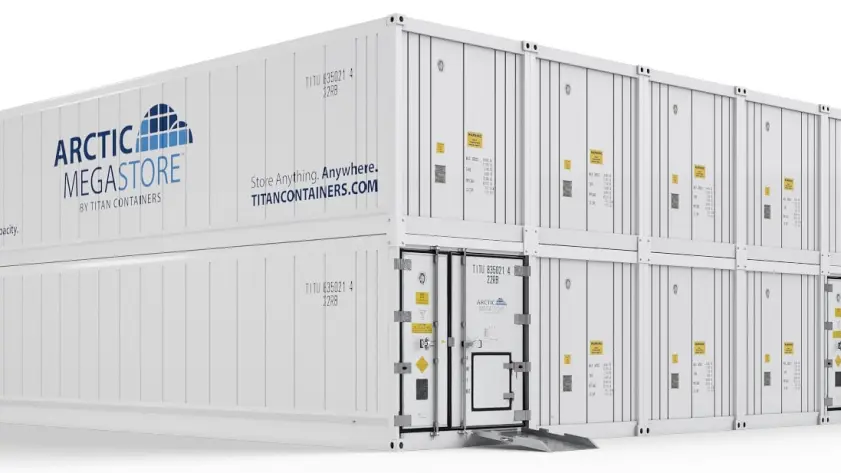
Revolutionary two-storey design, modular flexibility, and huge storage capacity – the Arctic MegaStore redefines cold storage efficiency.