Storage containers vs shipping containers: key differences
Published:
by Rasmus Nørgaard

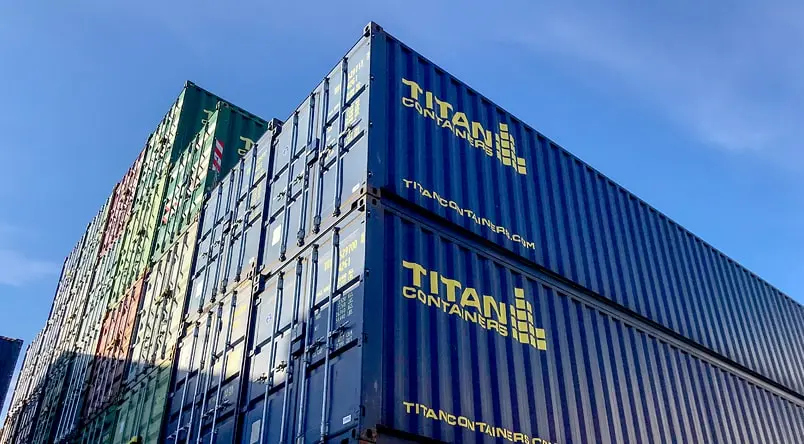
TL;DR – Storage containers and shipping containers are often the same thing, but it pays to do your homework.
Whether you are a homeowner, a business or you work in logistics or construction, you may have come across two terms that sometimes appear to mean the same thing: ‘storage container’ and ‘shipping container’.
In everyday conversation, the two terms are often used interchangeably – particularly in the UK – but technically they are not always the same.
In technical terms, true shipping containers are built to ISO (International Organisation for Standardisation) standards, which define their dimensions and structural performance.
This article will help you understand how and why a certain type of container is advertised as a shipping container and will also give you a clearer idea of your expectations when renting or buying a storage container.
We will also look at extra-tough containers designed for offshore use.
A storage container is a rectangular steel structure that usually has a pair of double doors at one end.
They are commonly available in the following sizes:
Other sizes are also available. Storage containers are used across the UK wherever people need more storage space.
Private customers looking for temporary storage container solutions rent or buy them as rugged garden sheds. They use them to store anything from garden tools and bikes to logs for the fireplace.
In a business setting, storage containers can be seen all over the country, housing everything from stock and supplies to spare tables and chairs or the office Christmas decorations.
They are usually fitted with vertical locking bars, which can be secured in place with a padlock. Sometimes, the padlock is covered by a ‘lockbox’, a square piece of metal welded onto the door that makes it difficult to prise the lock off with a crowbar or cut it off with an angle grinder.
Storage containers are used as:
If purchased, they can also be modified and used as garden rooms or even swimming pools.
One important thing to know about storage containers vs shipping containers is that there are no hard-and-fast rules about storage containers’ quality. Some are more durable than others.
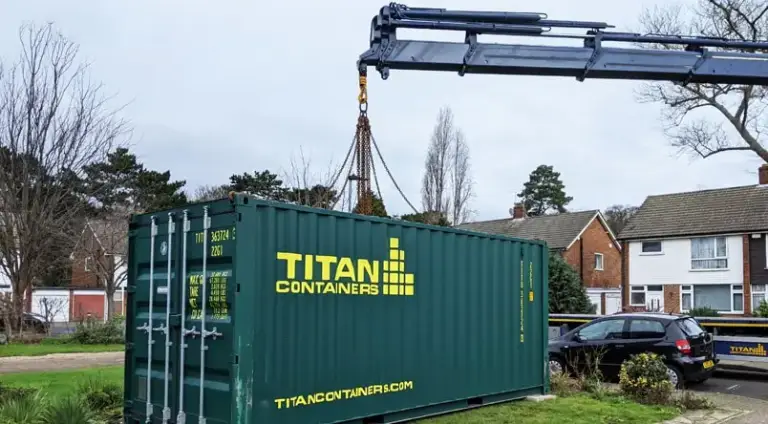
Shipping containers usually look very similar to storage containers. And in some cases, they are effectively the same thing.
To be classed as a shipping container, however, a container must not only be built to ISO standards, but it must also meet additional safety requirements set out by the International Convention for Safe Containers (CSC). Certified shipping containers should have a valid CSC plate attached to their surface.
This is not only a guarantee of the container’s durability; it also provides reassurance that it is suitable for transportation on a cargo vessel.
When you rent or buy a storage container, some companies provide genuine shipping containers. Hence the confusion: the storage container you rent or buy may actually be a shipping container.
If you are in the market for a shipping container or a storage container, the model you choose will be determined by its intended use.
For shipping goods internationally, you must seek out a certified shipping container with a valid CSC plate. This is your guarantee of build quality and durability.
For storing goods, both a shipping container and a storage container will be suitable in most cases.
As mentioned, some container sales and rental companies offer genuine shipping containers for clients’ storage. For the consumer, this provides reassurance that the container they are renting or buying is well-made.
However, other companies offer storage containers that are less rugged than shipping containers. While this can lower the price, the container may have inferior build quality, which could lead to problems such as corrosion.
If in doubt, ask your supplier whether your storage container is a genuine shipping container or a storage container built to less stringent standards.
While most designated storage containers are well up to basic storage tasks, lower-grade models that do not meet shipping container specifications may be more susceptible to security risks.
Storage containers that are not shipping containers sometimes have anti-corrosion paint/finishes to help improve performance. As storage containers are often left in the same place for years at a time, they may benefit from this kind of additional protection.
One notable difference between storage and shipping containers is that there are generally more storage container sizes available than shipping container sizes.
That’s because shipping containers must conform to ISO standards. Consequently, the vast majority of ISO shipping containers for international freight are 20 foot and 40 foot units – widely accepted by cargo vessels. Shipping container sizes are tightly regulated.
So how does a company like TITAN say that its 6 foot and 10 foot containers, for example, are shipping container-grade? The answer lies in the build quality of these containers, which mirrors that of larger ISO containers.
For offshore shipping (oil rigs, gas platforms, etc.), even more robust containers known as DNV Offshore containers are available. These are certified for use in the most extreme conditions, with regular exposure to salty sea air.
A fourth type of container is a reefer container – a refrigerated container used by a variety of industries, including supermarkets, catering and pharmaceuticals.
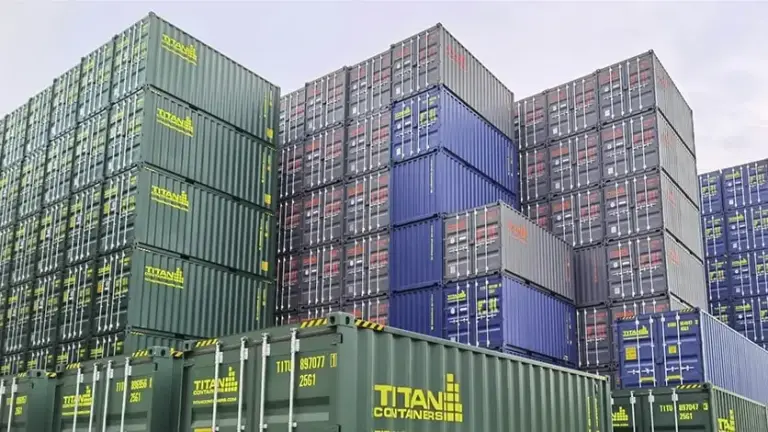
With a single exception, TITAN Containers in the UK only offers genuine shipping-grade containers to storage container clients – almost all our shipping containers and storage containers are identical.
That means when you rent or buy a storage container from TITAN, it will often have a valid CSC plate.
The exception is our rugged easy-open storage container, which we developed especially for storage clients who wanted fast and easy access to their goods.
Instead of buying shipping or storage containers, many people prefer to rent. If you buy a storage container, it can be challenging (and expensive) to get rid of when it reaches the end of its lifecycle.
Choosing storage containers for hire means you can return them once you have finished with them.
Renting is especially popular in shipping, as it allows a business to scale up or down as needed. TITAN Containers also offers something known as a one-way rental, where the hired shipping container can be returned to a local yard in the destination country.
Maintenance costs for shipping and storage containers are generally low, as they are built to last many years.
When containers start to look tired, a repaint can work wonders – although this is quite an expensive option if you use a professional repainting service. Dents and rust damage can often be fixed with a little TLC.
| Shipping container | Storage container | |
| Has CSC plate | Yes | No |
| Suitable for international shipping | Yes | No |
| Suitable for storage | Yes | Yes |
| Pricing | £££ | ££ |
| Multiple sizes | Mostly 20ft and 40ft | Yes (5ft to 40ft) |
The biggest mistake you could make when renting a shipping container for international use would be to inadvertently rent or buy a storage container that does not meet the relevant ISO standards and does not have a valid CSC plate.
Your container would likely be turned away at the loading dock.
The other error you could make is paying over the odds for a shipping container when all you need is portable storage containers, which can be cheaper. Scams also abound, so it pays to do your homework before renting or buying a container.
With the exception of our easy-open storage containers, TITAN does not distinguish between the two types and will provide you with a bona fide shipping container (or shipping-grade container if it’s a smaller unit) for storage purposes.
Prices are designed to be competitive in the UK market, and all TITAN containers are built to last.
Need help deciding? Contact us to discuss storage and shipping container options and get a tailored quote.
Quick links
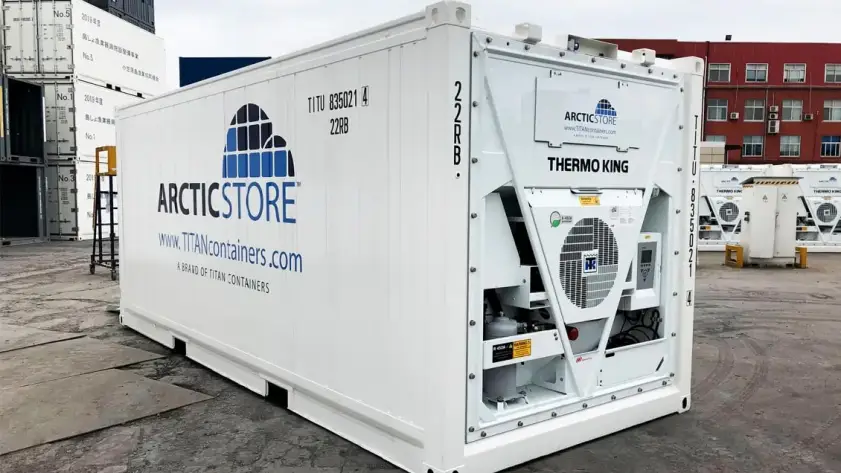
A reefer container is a powered, temperature-controlled container designed to store or transport chilled and frozen goods. This guide explains how reefer containers work, the different types available, and when they’re the right solution for cold storage needs.
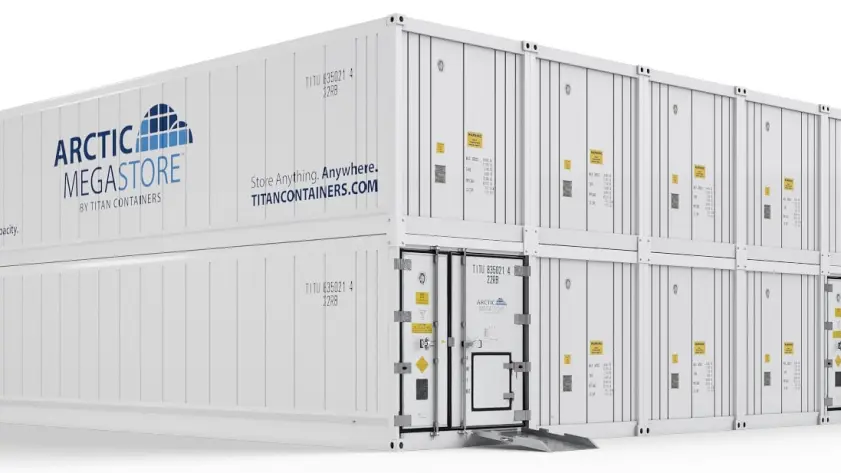
Revolutionary two-storey design, modular flexibility, and huge storage capacity – the Arctic MegaStore redefines cold storage efficiency.

Cold chain failures cost industries billions each year but the true damage goes far beyond product loss. From reputational harm to regulatory penalties, even a single temperature excursion can trigger financial, operational and brand crises.